Friendly laser support for shops, schools, studios, and production teams Need help choosing wattage? Ask OMTech
Guided setup services

OMTech helps teams turn laser questions into a workable shop plan.

Buying a laser is easier when the conversation begins with materials, ventilation, cooling, floor space, operators, and the kind of work your team wants to ship. OMTech service guidance is shaped for owners, teachers, makers, and production leads who need plain answers before they commit to a machine.
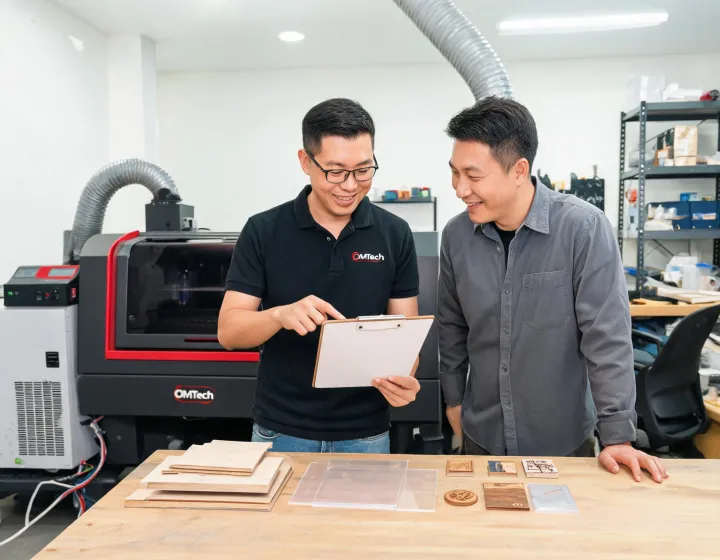
Advisor reviewing laser setup with a shop owner
What we offer

Support that starts before the crate arrives

01

Machine selection sessions

OMTech helps you compare CO2, fiber, MOPA, engraving, marking, and welding options around material thickness, marking contrast, bed size, budget, operator skill, and the kind of repeat work you expect to handle.

02

Workspace readiness reviews

A practical review covers ventilation paths, cooling placement, power access, fume capture, fire-watch habits, eyewear zones, and how the laser will fit alongside benches, packaging tables, classrooms, or production cells.

03

Material test planning

Your first useful settings come from organized test cards. We help teams plan speed, power, frequency, focus, air assist, fixture, and surface preparation trials for wood, acrylic, coated metal, stainless tags, leather, and anodized parts.

04

Operator handoff support

After selection, OMTech guidance helps new users understand daily checks, lens care, mirror alignment, rotary use, file setup, job notes, and when to stop for troubleshooting instead of guessing through a risky run.

Embedded FAQ

Questions we hear every week

Good service means translating machine details into decisions a real team can make. These answers keep the buying process grounded in daily laser use instead of vague promises.

Start with the thickest material you actually process, the finish you need, and how often the job repeats. A shop making acrylic signs has a different answer than a school lab engraving plywood projects or a metalworking bench marking serialized components.

Yes. We can walk through machine footprint, material loading, exhaust routing, compressor noise, cooling access, computer placement, and where finished jobs should land so the laser becomes part of the workflow rather than a crowded corner purchase.

Focus height, material hold-down, air assist, test grids, cleaning rhythm, emergency stop location, and basic file hygiene should come before complex projects. Strong first habits prevent wasted material and make later upgrades easier.
Before and after

From uncertain shortlist to confident first run

Before guidance

  • Wattage chosen from forum comments rather than material data.
  • Ventilation, cooling, and fire-watch planning left until delivery week.
  • First jobs use random settings, which wastes stock and operator patience.
  • Maintenance is reactive, so lens smoke and alignment drift hide in plain sight.

After OMTech planning

  • Machine type, work area, and accessory choices match the jobs that matter.
  • The room plan includes airflow, water, workholding, safety habits, and training time.
  • Operators begin with test cards and job notes they can repeat and improve.
  • Daily and weekly checks become simple routines instead of emergency repairs.
Bring your material list

Request an OMTech setup conversation.

Tell us what you need to engrave, mark, weld, or cut. We will help you compare the machine path, accessories, and operator habits that make sense for the work in front of you.